
- SOFTTUNE
- September 2025
- Artificial Intelligence
Share this :
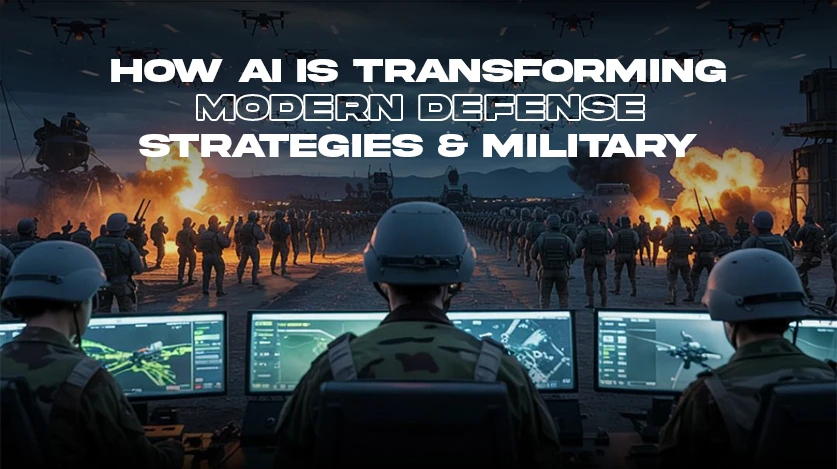
How AI is Transforming Modern Defense Strategies and Military Operations
Artificial Intelligence (AI) is no longer a futuristic idea—it is already shaping the battlefield of today. The integration of AI in defense is revolutionizing how armed forces plan, operate, and respond to modern challenges. By leveraging AI, militaries around the world are enhancing decision-making, automating critical operations, and preparing for next-generation threats across land, air, sea, cyber, and space domains.
This article explores how artificial intelligence in military operations is being applied, its key benefits, the challenges it presents, and what the future of AI-powered defense may look like.

The Integration of AI in Military Operations
The military has always been at the forefront of adopting cutting-edge technologies. Today, AI military applications are influencing almost every aspect of defense—from autonomous drones and robotics to advanced cybersecurity and battlefield analytics.
Here are some of the most impactful areas:
1. Autonomous Systems and Robotics
One of the most visible uses of AI in defense is the deployment of autonomous systems such as drones, unmanned aerial vehicles (UAVs), ground robots, and naval vessels. These AI-powered machines can carry out reconnaissance, surveillance, mine detection, logistics, and even combat missions with minimal human intervention.
The advantage is clear: autonomous systems reduce risks to human personnel by taking on dangerous tasks, while also increasing operational reach. For example, during the ongoing Ukraine conflict, drones have been used not just for surveillance but also for logistics, assault operations, and mine-clearing. In one notable case, drones even facilitated the capture of prisoners, marking the first-ever robotic surrender in warfare history. This shows how AI in defense robotics is moving from support roles to active combat participation.
2. Cybersecurity and Threat Detection
In today’s digital age, cyber warfare is as critical as traditional combat. Military infrastructure, communications, and command systems are constant targets for cyberattacks. AI in military cybersecurity enhances the ability to detect, predict, and neutralize threats before they cause damage.
Machine learning algorithms can analyze massive streams of data to identify unusual activities, detect malware, and block potential intrusions in real-time. Unlike traditional methods, which rely on pre-defined rules, AI systems continuously learn and adapt, making them more resilient against evolving threats. This allows armed forces to protect sensitive data, maintain secure communications, and safeguard critical defense networks.
3. Decision Support Systems
Making fast and accurate decisions is critical in military operations where seconds can change the outcome of a mission. AI-powered decision support systems help commanders process vast amounts of information, simulate possible scenarios, and recommend the best course of action.
For instance, in a battlefield situation, AI can analyze satellite imagery, troop movements, and environmental conditions to provide actionable insights. This improves situational awareness, reduces uncertainty, and enables leaders to make smarter, data-driven decisions. In essence, AI is acting as a force multiplier, enhancing human judgment with machine precision.
4. Training and Simulation
Training is a cornerstone of military readiness, and AI is making it smarter. AI-powered training and simulation tools create highly realistic environments where soldiers can practice strategies without physical risks. Unlike traditional static simulations, AI-based systems adapt dynamically to the trainee’s decisions, creating unpredictable scenarios that mimic real-world complexity.
This type of training not only sharpens combat skills but also improves critical thinking, teamwork, and decision-making under stress. In addition, virtual training environments save resources, reduce costs, and provide a scalable way to prepare large numbers of troops effectively.

Benefits of AI in Defense
The integration of artificial intelligence into defense systems offers a range of advantages that go beyond speed and automation. Some of the most important benefits include:
- Enhanced Efficiency: AI automates repetitive and data-heavy tasks, freeing up military personnel for more complex missions.
- Improved Accuracy: Machine precision reduces human error, ensuring better targeting and minimizing collateral damage.
- Rapid Decision-Making: AI systems process data at lightning speed, allowing quick responses in high-pressure environments.
- Resource Optimization: Predictive analytics improve the allocation of supplies, equipment, and manpower.
- Increased Safety: Autonomous systems take on hazardous tasks, reducing risks to human soldiers.
Collectively, these benefits strengthen the overall effectiveness of armed forces while maintaining operational superiority.
Challenges and Ethical Considerations
While the advantages of AI in defense are undeniable, its integration also raises significant challenges and ethical questions. Some of the key issues include:
- Autonomy and Accountability: Who is responsible if an autonomous weapon makes a mistake? The lack of clear accountability frameworks remains a concern.
- Cybersecurity Risks: AI-driven systems themselves can become targets for hackers, leading to devastating consequences if compromised.
- Bias in Algorithms: If AI systems are trained on biased data, they may make unfair or inaccurate decisions that could escalate conflicts.
- Escalation of Warfare: Autonomous weapons may lower the threshold for conflict, making it easier for nations to engage in war without considering human costs.
These challenges highlight the need for strong ethical guidelines, transparent systems, and international agreements to regulate the military use of AI responsibly.
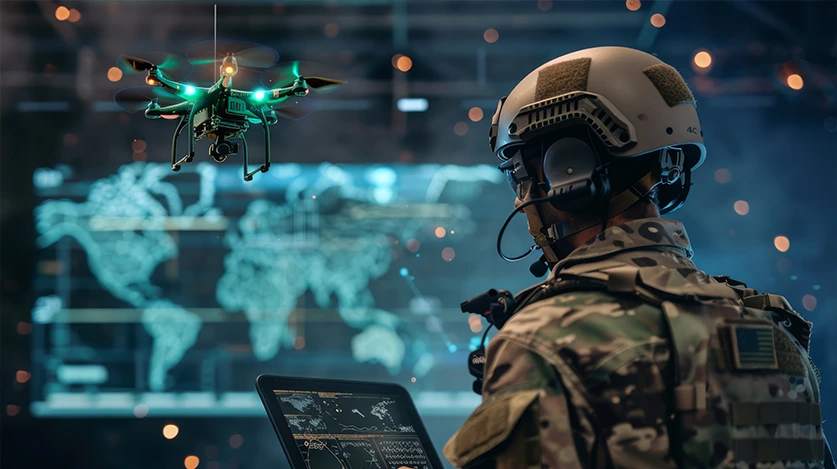
The Future of AI in Defense:
Looking ahead, the role of AI in military operations is expected to expand even further. Future developments may include:
- Swarming Technologies: AI will enable large numbers of drones or robotic units to work together, overwhelming adversaries with coordinated strategies.
- Advanced Cyber Defense: AI will continue to evolve, offering more sophisticated tools to predict, detect, and counter cyberattacks.
- Enhanced Human-AI Collaboration: The future will not be about AI replacing humans but about synergy—combining human creativity with machine efficiency for optimal outcomes.
- Predictive Warfare: AI will be used to forecast enemy actions, logistics needs, and battlefield outcomes with unprecedented accuracy.
- Integration into Space Defense: As nations race toward space militarization, AI will play a vital role in managing satellites, monitoring threats, and securing space assets.
These advancements point toward a future where AI in defense strategies is not just a support tool but a core component of military power.
Conclusion: A Turning Point for Energy and Industry
Artificial intelligence is fundamentally transforming how nations approach modern defense strategies and military operations. From autonomous systems and robotics to cybersecurity, training, and decision-making, the scope of AI military applications is vast and rapidly growing.
While the benefits—such as efficiency, accuracy, and safety—are significant, the challenges surrounding ethics, accountability, and security must not be ignored. The future of AI in defense depends on finding the right balance between innovation and responsibility.
Ultimately, as AI continues to evolve, it will redefine not only how wars are fought but also how peace is maintained. Responsible adoption of AI technologies will ensure that militaries remain both effective and ethical in an increasingly complex world.