
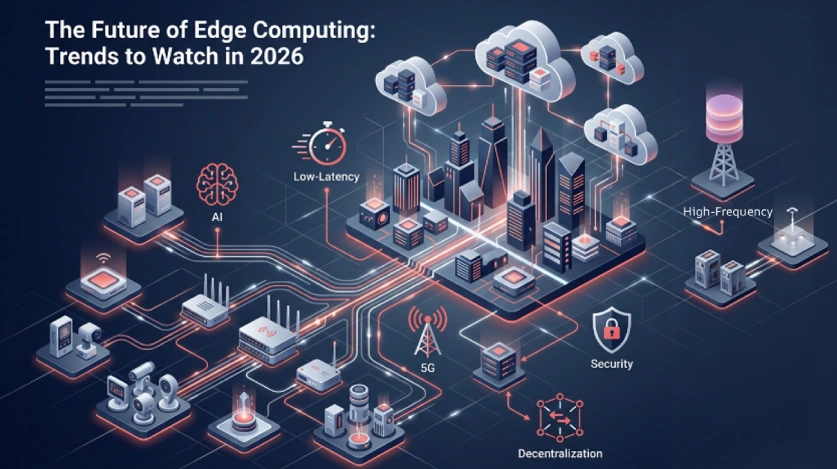
The Future of Edge Computing: Trends to Watch in 2026
Edge computing has moved far beyond the pilot phase. By 2026, it has matured into a strategic pillar for industries that depend on real-time decisions, low latency, and strong data governance. With AI automation rising, 5G networks improving, and decentralized digital ecosystems expanding, edge computing now works hand-in-hand with the cloud—strengthening digital operations rather than replacing centralized systems.
This updated outlook explores the top edge trends to watch, why adoption is accelerating so rapidly, and the steps businesses must take to prepare for a distributed, intelligent future.
Why Edge Computing Has Become a Priority in 2026
Organizations across retail, manufacturing, logistics, healthcare, and mobility have reached a tipping point where cloud-only architectures can no longer keep pace. Data volumes continue to surge, and mission-critical applications demand responses in milliseconds. Edge computing solves these constraints by enabling processing closer to the source, reducing latency, and enhancing data control.
In 2026, this shift isn't optional—it's fundamental. As AI and IoT systems multiply across devices, the need for ultra-fast, local data processing has become essential for performance, privacy, and operational resilience.
AI at the Edge Becomes Standard Practice
Where AI at the Edge Is Growing Fastest
AI inference is rapidly moving from centralized servers to on-device processing, enabling real-time intelligence without cloud delays. This shift reduces bandwidth use, boosts user privacy, and delivers automation that reacts in fractions of a second—making AI-powered edge systems an industry standard by 2026.
Edge + Cloud Becomes a Unified Digital Layer
A Dual Architecture That Works Together
As organizations mature digitally, the question is no longer "cloud or edge?" but "how do both integrate efficiently?" In 2026, hybrid architectures have evolved into a coordinated system where the cloud manages large-scale analytics and model training, while the edge performs localized actions instantly.
This unified approach provides scalability, strong uptime for remote environments, and balanced resource consumption across distributed networks—becoming the new operational blueprint.
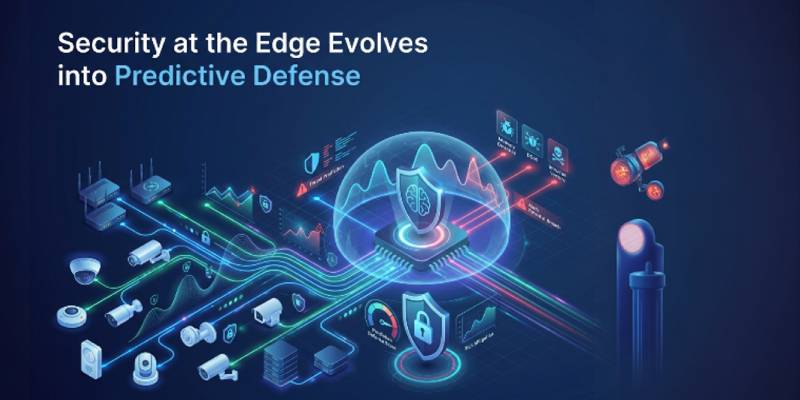
Security at the Edge Evolves into Predictive Defense
Security at the edge is no longer reactive. By 2026, organizations lean on predictive, AI-enhanced protection models that monitor threats proactively across distributed devices and micro-environments.
5G Advanced Will Accelerate Real-Time Automation
With 5G Advanced becoming widely available, edge computing gains a powerful connectivity backbone. Faster speeds, dense device support, and consistent low-latency connections unlock new possibilities for automation across industries. Drones, AR/VR training systems, industrial machinery, and autonomous transport networks all perform more reliably as real-time data flows improve. As connectivity strengthens, the edge becomes the preferred environment for critical, time-sensitive operations.
Smart Cities Will Lean Heavily on Edge Intelligence
Key Urban Use Cases
Cities increasingly rely on decentralized computing to build safer, greener, and more responsive environments. Processing at the edge allows critical public systems to react instantly to local conditions rather than waiting for cloud round-trips.
Micro Data Centers Will Expand Across Industries
Why Micro Data Centers Are Rising
Compact, localized micro data centers are emerging as alternatives to distant, large-scale facilities. They are faster to deploy, reduce network congestion, and deliver stronger performance for distributed teams. As organizations adopt more edge-heavy architectures, these small but powerful units become essential to maintaining efficiency and uptime.
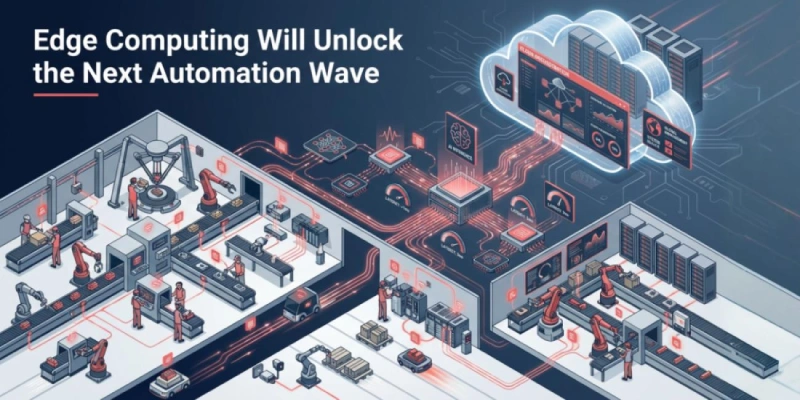
Edge Computing Will Unlock the Next Automation Wave
Automation is entering a new era, powered by the edge's ability to evaluate and respond instantly. From robots adjusting operations based on live feedback to distribution hubs rerouting shipments autonomously, edge-driven automation removes delays that previously limited efficiency. Inspection systems, manufacturing lines, and warehouse operations are all becoming more adaptive, creating a dynamic automation ecosystem.
Sustainability Will Shape the Future of Edge Infrastructure
Sustainable design is increasingly influencing how edge systems are built. Eco-friendly hardware and energy-conscious architectures not only reduce environmental impact but also lower operational expenses.
Industries Will Shift Toward Edge-Native Application Development
Industries are moving away from retrofitting cloud applications for edge use. Instead, they are building edge-native solutions designed for local-first execution. This shift supports real-time responsiveness and privacy without relying heavily on cloud cycles.
Edge-Native Models Emerging
Design principles based on asynchronous execution and distributed logic are defining the next era of modern software.
How Businesses Can Prepare for the Edge-First Future
Early adopters will gain unmatched speed, resilience, and intelligence across their digital ecosystems.
Conclusion
By 2026, edge computing becomes a central enabler of fast, secure, and intelligent digital operations. Its tight integration with AI and advanced 5G networks empowers organizations to make decisions instantly and automate processes more effectively. For companies willing to evolve early, edge computing offers a competitive advantage built on real-time responsiveness, stronger security, and a future-ready technical foundation.